 Step 1 Image
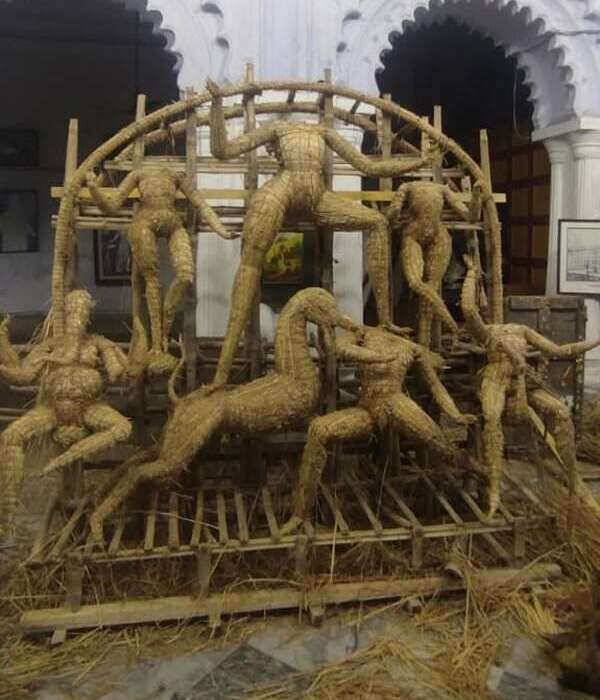
Kathamo Construction
Frame SetupArtisans create the wooden and bamboo skeleton (Kathamo). Bamboo planks and posts are cut and tied with jute twine to establish the structural base for single deities like Ganesha, Kali, or Saraswati, or complex multi-deity compositions like Durga and Jagadhatri.
 Step 2 Image
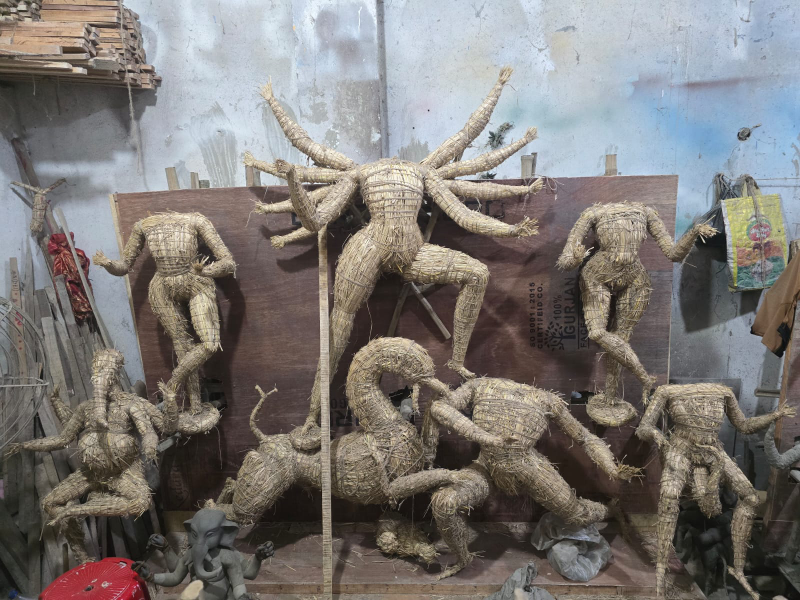
Khar Binda
Straw BundlingDry paddy straw is bound tightly around the bamboo framework using jute rope. This forms the rough anatomical contours and torso volume of the deity while keeping the idol’s core lightweight and sturdy.
 Step 3 Image
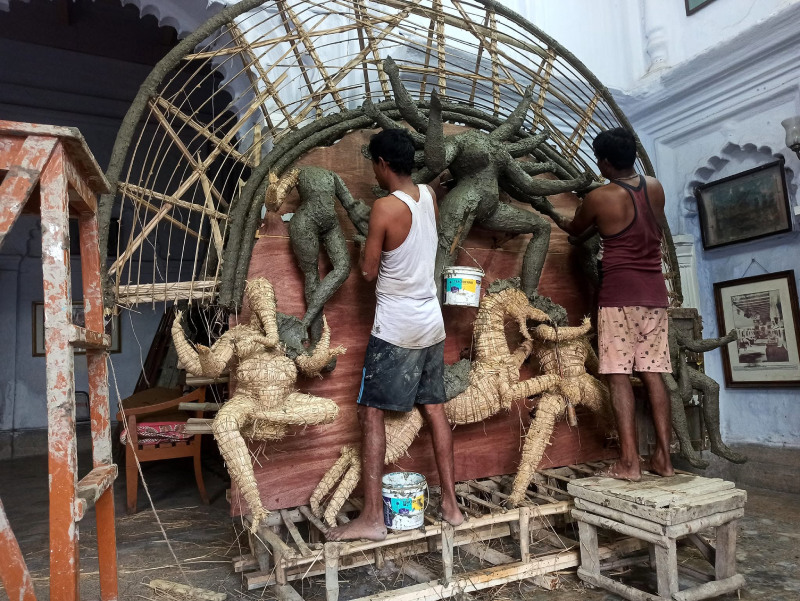
Etel Mati Application
First Clay LayerThe initial coat of sticky, heavy riverbed clay (Etel Mati) — blended with rice husk and the ritual Punya Mati — is applied over the straw base. This layer seals the straw frame and provides structural weight and cohesion.
 Step 4 Image
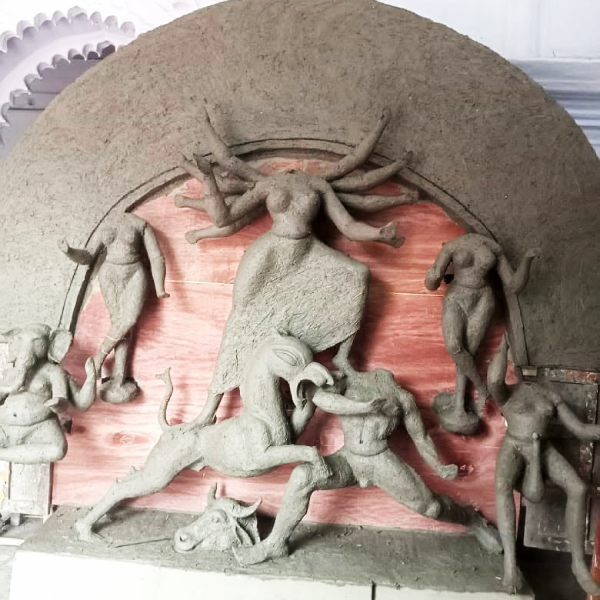
Bele Mati Coating
Fine Clay & Jute LayerA finer alluvial soil (Bele Mati) mixed with shredded jute fiber is applied for surface modeling. Artisans smooth out muscle contours, limbs, facial structure, and drape folds. Jute fibers serve as natural tensile reinforcement to prevent surface cracking as the clay shrinks during drying.
 Step 5 Image
Mukh Porano
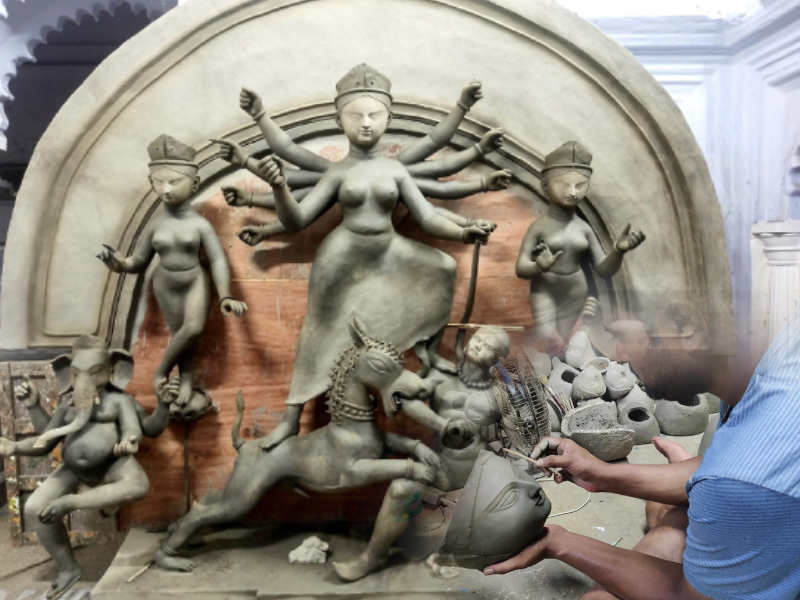
Attaching Head & HandsDeity faces, hands, and intricate features are cast separately using clay and reusable plaster-of-Paris molds. Once semi-dry, the molded faces (Mukh) and hands are seamlessly fused to the torso using wet clay and jute ties.
 Step 6 Image
Khori Maati
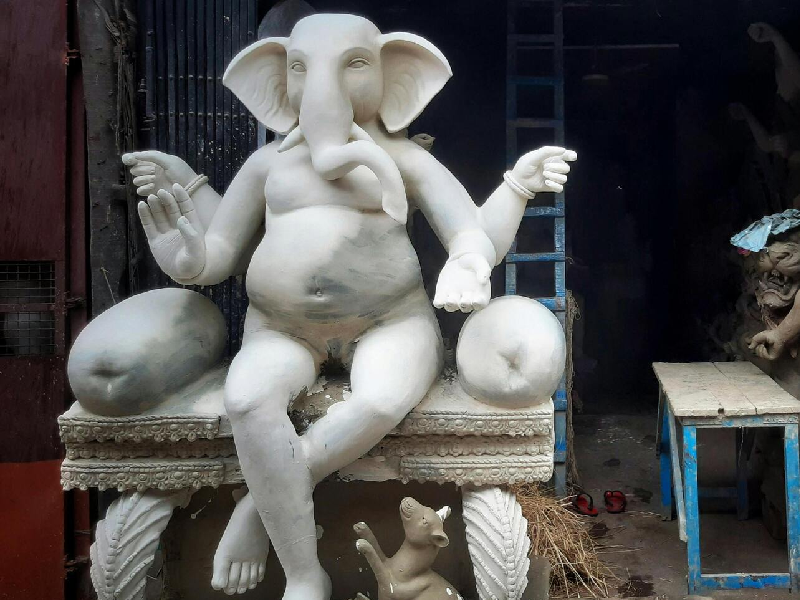
Drying & PrimingThe idols are left to air-dry naturally in Kumartuli’s workshops and lanes. Once moisture evaporates, a white chalk-clay wash (Khori Maati) mixed with natural tamarind seed glue or starch is painted over the idol as a sealer and base coat.
 Step 7 Image
Rang and Chokh Daan
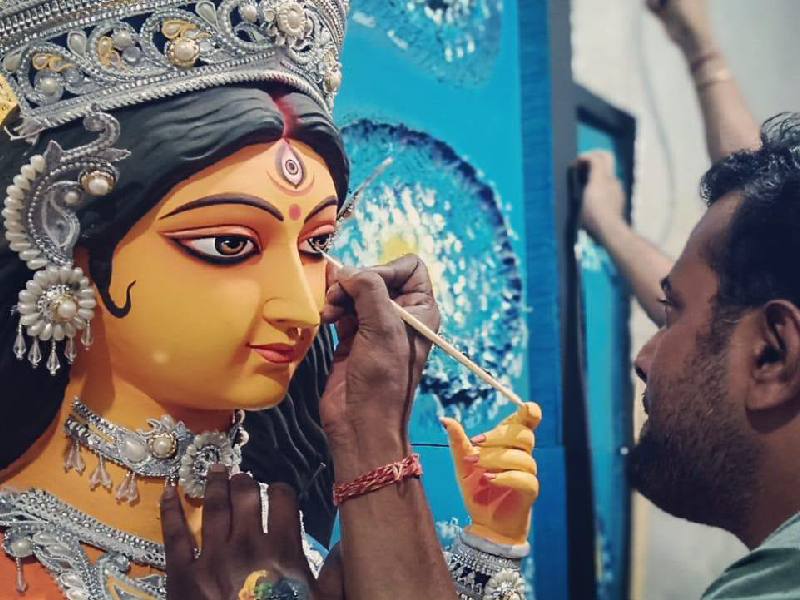
Painting & Eye DrawingArtisans apply non-toxic, water-soluble paints to depict skin tones characteristic of specific deities (e.g., yellow/white for Saraswati, dark blue/black for Kali, golden yellow for Durga and Lakshmi). The process culminates in Chokh Daan — drawing the deity’s eyes — a sacred phase traditionally performed by senior artists in a state of ritual focus.
 Step 8 Image
Saaj and Draping
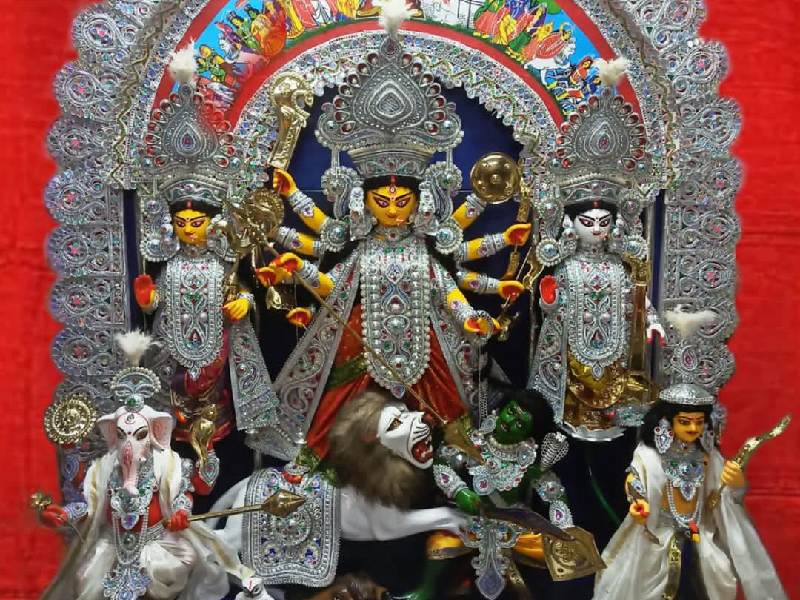
Final DressingThe completed deity is dressed in fabric sarees, silk garments, or traditional Sholar Saaj (intricate white cork work) and Daker Saaj (embossed metallic foil ornamentation). Painted jute hair is attached, along with crown structures (Mukut) and ceremonial weapons or iconic items (e.g., Saraswati’s Veena, Ganesha’s Modak, Kali’s Sword).